

Most people look up your website before they get in touch. Whatever is there becomes their idea of you, and it forms before you ever hear from them. The ones who are not convinced do not tell you. They go with someone else.
I made my first website in 1997, as a designer in a web company. Today I build and run sites for research labs, businesses and private collections: web design, code, hosting and maintenance, along with the photography, video and graphic design made for the pages themselves.
What kind of website do you actually need?
A research institute, a museum, a private collection and a business do not need the same website. The goals are different, and so is the way each one is kept up to date.
What changes most is not the look. It is how often the site has to be updated, and whether you want to be the one doing it. Some sites are updated a few times a year, and their owners would rather not think about it at all. Others are a database that gets new entries several times a week, and you want to be able to add them without asking anyone.
Custom web design is not decoration. It is what a visitor reacts to before reading a word, and it is built for you: your field, your audience, what you need them to think in the first three seconds. A research lab and an interior design studio do not get the same page, and neither of them gets a template.
It also moves with you. A brand shifts, an audience widens, a new service arrives, and the design follows without disturbing what sits underneath. The structure is the part that is expensive to change later, so that is the part we settle first, together, before anything is drawn.
Here are a few of the sites I have built. Businesses, research labs, private collections. Each one started with a different need. On some, I was there with a camera before I was there with code.
Websites for research laboratories
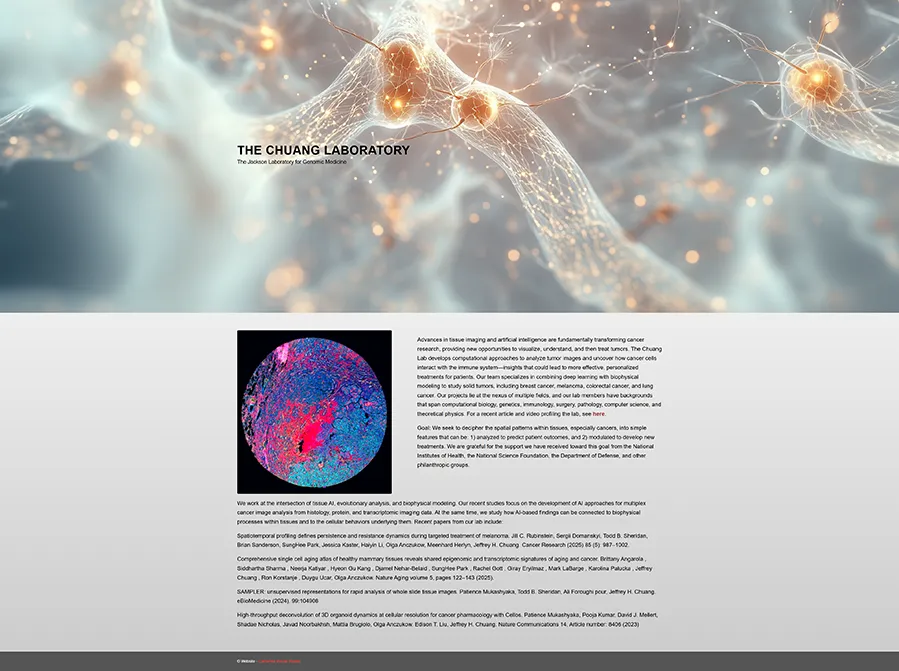
Directors of research labs at The Jackson Laboratory for Genomic Medicine, in Farmington, CT, have come to me one after another. Each one after seeing the site of the lab next door.
A lab website is not a static brochure. It is a working record: publications, team members, alumni, datasets, protocols, code. It is also what a prospective postdoc reads before applying, what a collaborator checks before writing, and what a review panel finds when it looks you up. Experts in the field consult it, and it goes out of date faster than anything else on the web. A paper comes out and the site is already behind.
Duygu Ucar leads one of these labs. Her team could have built the site themselves, but they did not have the time and did not want to spend it on updates. She sends me the new paper, and it goes online. See the Ucar Lab website.
If you run a lab, that is the part worth knowing. Your publication list stays current, and nobody on your team stops their work to do it. You send me the reference, I put it online.
I also photograph in these labs. Portraits, research images and video for the same institute: The Jackson Laboratory.
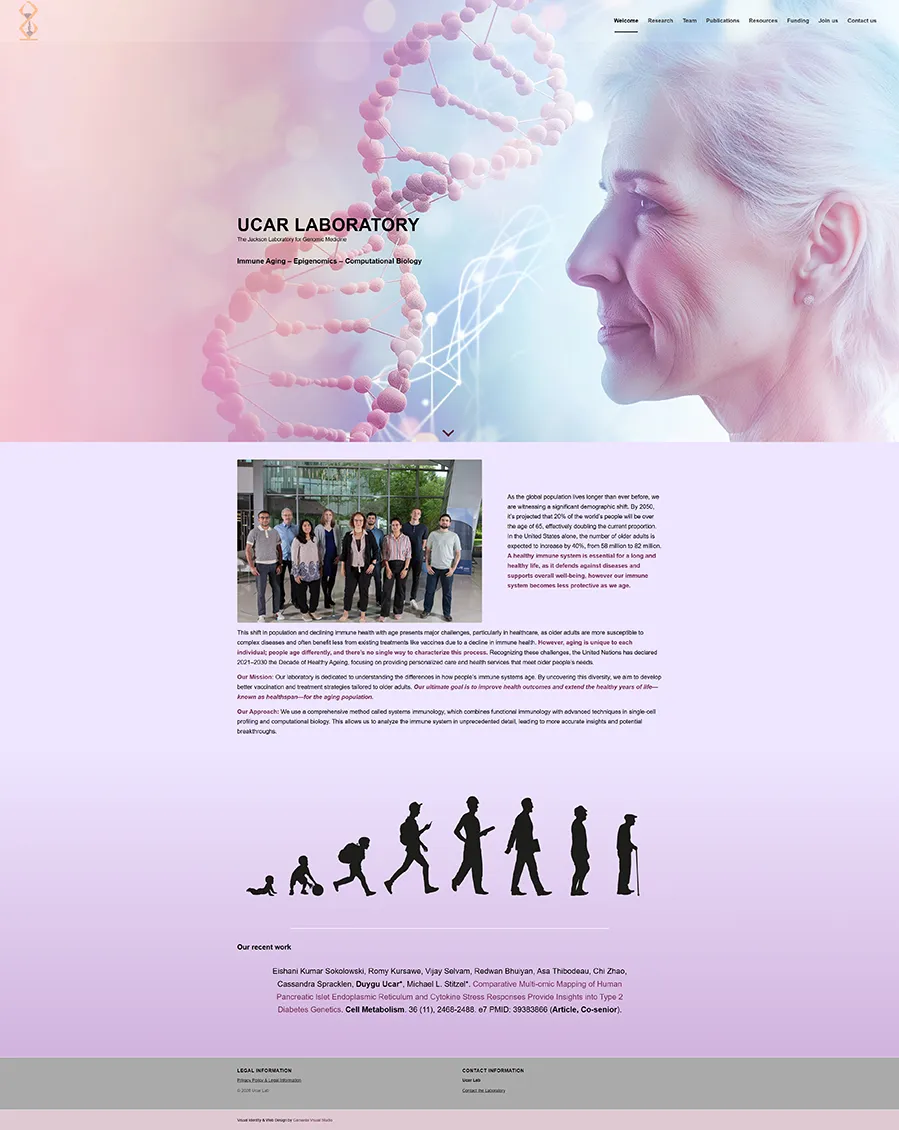
Ucar Lab, the home page
Websites built around a database
Some sites are not a set of pages. They are a database with several ways in, and not everyone sees the same thing.
Rock of Science holds a private mineral collection. The public side is open to anyone. Every specimen has its own record with its chemical formula, its hardness and the mine it came from, and visitors reach the collection through a periodic table, a world map or a filter by color. The owner can send anyone straight to a single piece.
You type the first letters of a mineral name and the rest fills itself, drawn from a reference of more than six thousand species. Adding a specimen takes less than three minutes through a single clear form, and the collector does it himself.
Behind a login sits the private section, the part only he sees. There he tracks what he paid and what a piece is worth today. A specimen can be on loan to a museum, away for restoration, sold or given away, and the record says where it went and when it comes back. See how Rock of Science was built.
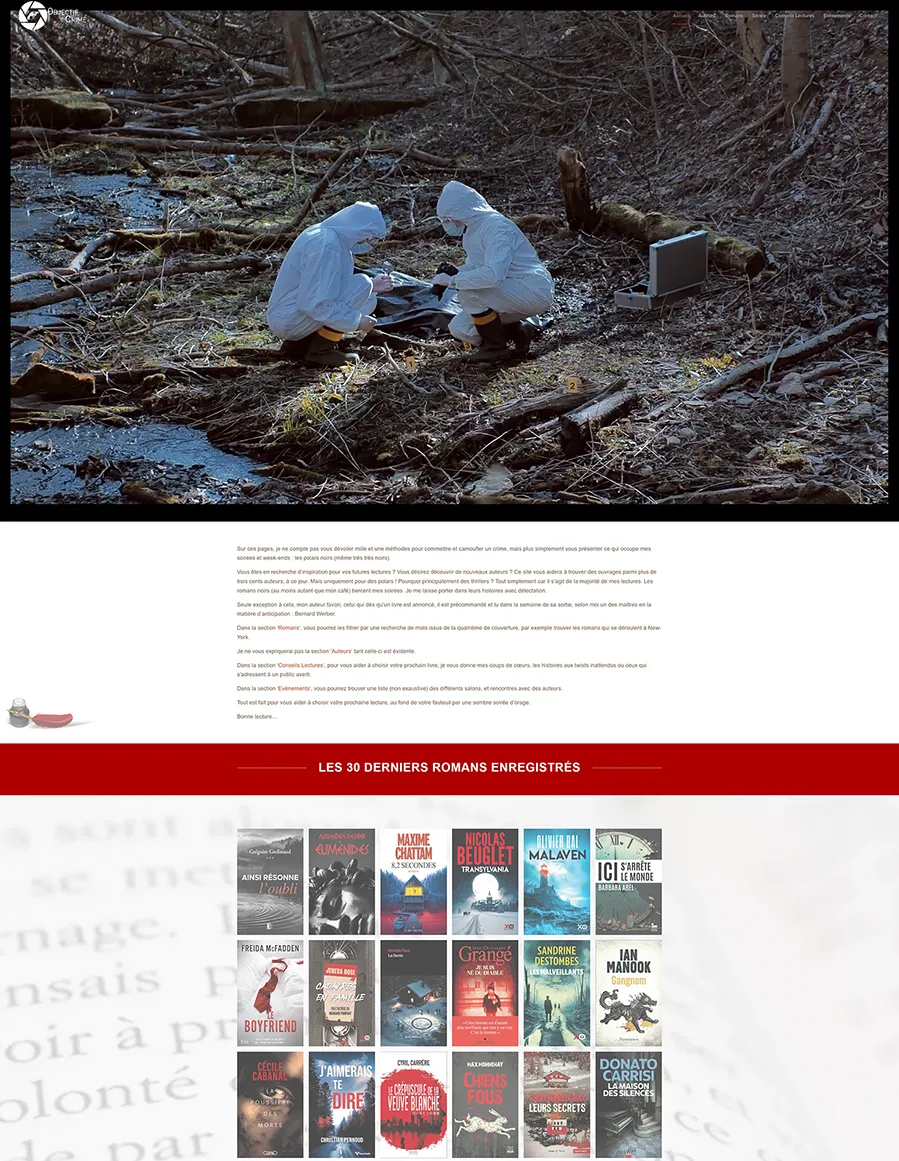
Objectif Crime is a library of crime fiction. I built the database, entered the first three authors with a dozen titles, and trained the owner on her side of the site. She now runs it without me. The site holds more than three hundred authors and over two thousand titles, and she has entered every one of them herself. See Objectif Crime.
How much you do yourself is your decision. Training if you want it, or send me the update and think no more about it. Either way the price is the same.
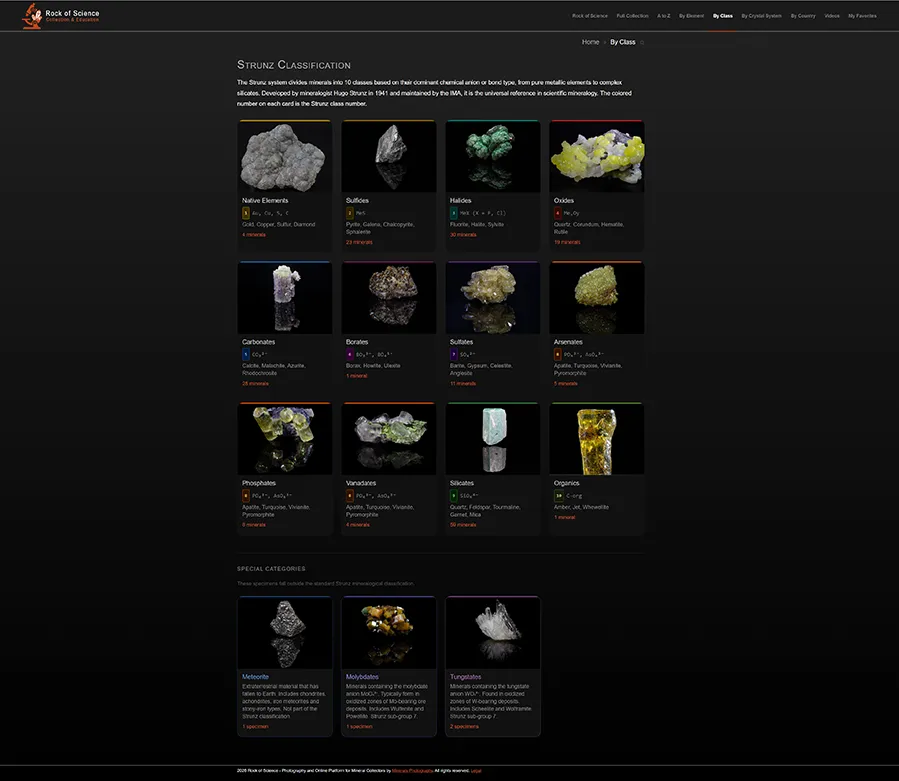
Rock of Science, the collection browsed by mineral class
Websites that present what you do
Not every site holds a database. Some are there to bring in enquiries, and then the writing and the navigation decide the result.
Académie Grande Ourse is the website of Stéphanie Lauzé, a learning specialist in Quebec. She works with students who are struggling, not because the subject is too hard, but because nobody taught them how to learn. Her site speaks to two different people: the parent and the child. One decides, the other is the one who will sit through the sessions, and has to feel safe there from the first line. So it has two sections, written in two voices. The student section talks to the student directly, and opens by promising not to trip anyone up. We revise it together once a year, before the school year starts. See Académie Grande Ourse.
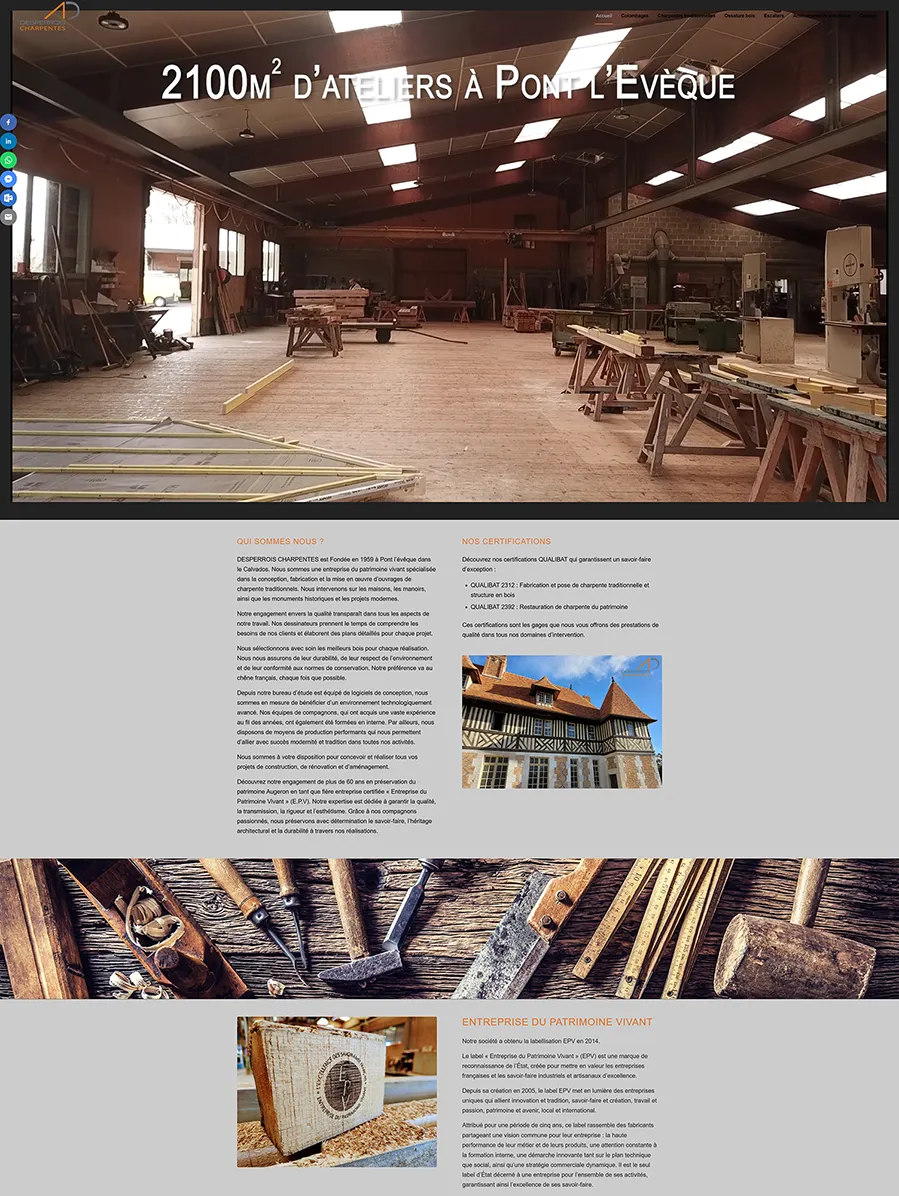
Desperrois Charpentes has been building timber frames in Normandy since 1959, and restoring the region’s half-timbered houses. Many of them are listed historic buildings that few companies are allowed to touch. Their clients are architects, heritage authorities and private owners, and all of them want to see the work before they get in touch. This is where an image proves something and words can only promise, so the site is built around galleries, with the text kept short. See Desperrois Charpentes.
Both sites exist to bring in work. What differs is what a visitor has to see before they act: a method they can trust, or proof the work has been done.
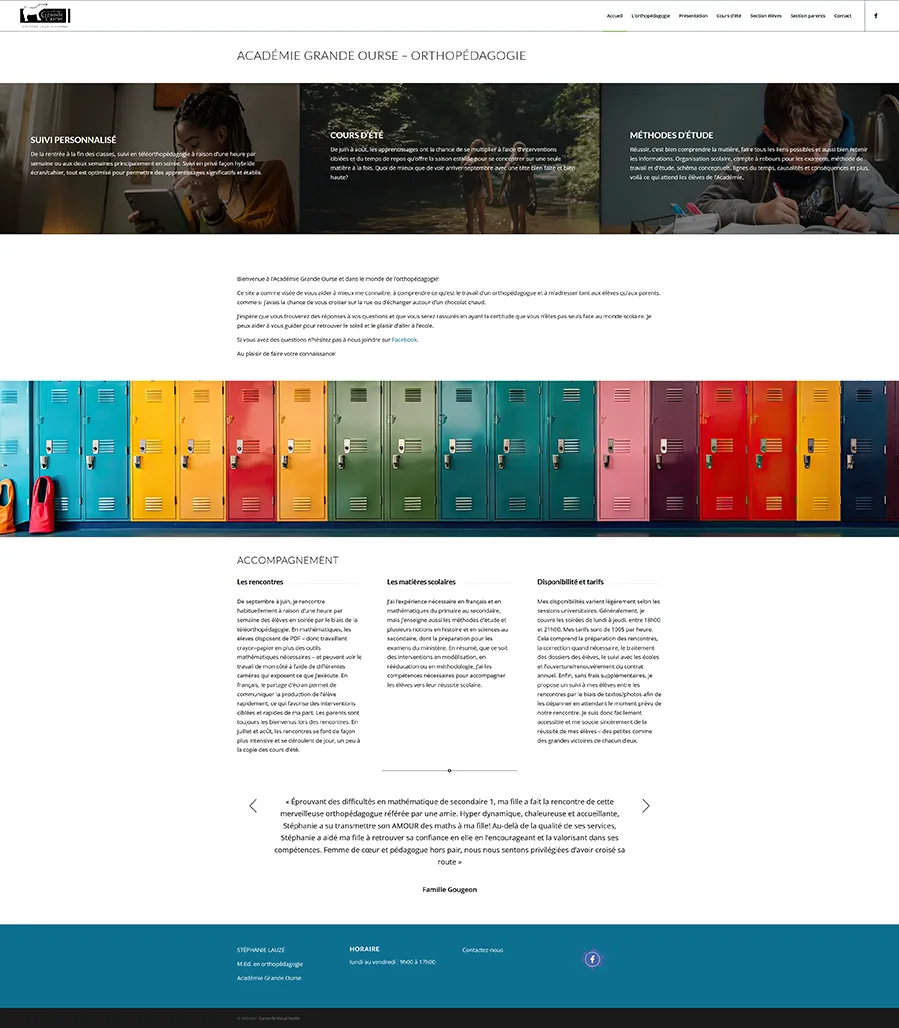
Académie Grande Ourse, the home page speaking to parents and student
What happens once your site is online
The sites I build are hosted on a dedicated server, maintained and monitored here, rather than a separate contract for each client. It is kept current, backed up daily and secured against attacks. You have no hosting provider to deal with and no invoice to track.
If you ever want to leave, you take the domain with you. I hand it over and work with whoever takes the site on, so nothing breaks in the handover.
Hosting, technical updates and the usual content changes are included. A text to change, a photograph to replace: you send a message, and it is online within two days. The technical side of search visibility comes with the build, not as an extra: page structure, titles, image weight, indexing.
You can bring your own images, and plenty of clients do. If you would rather not, I shoot the photography and video myself, billed separately. Sites built that way hold together better, because the images were made for the pages they sit on rather than found afterwards.
A site left alone quietly stops working. Plugins break, security lapses, a page loads slowly and nobody notices. You write to the person who built the site, and I am the one who fixes it.
Photographs made for the page
Most images on a website were made for something else, then cropped to fit. It shows.
I shoot for the site itself, planned page by page before the session. I know what each image has to do and where it will sit. The same session covers the brochure, the report and the trade show panel when you need them.
L’Atelier Gris Mousse was an interior design studio in Normandy. For seven years I handled everything they put in front of people: the website, the photography, the video, the printed material. See the seven years.
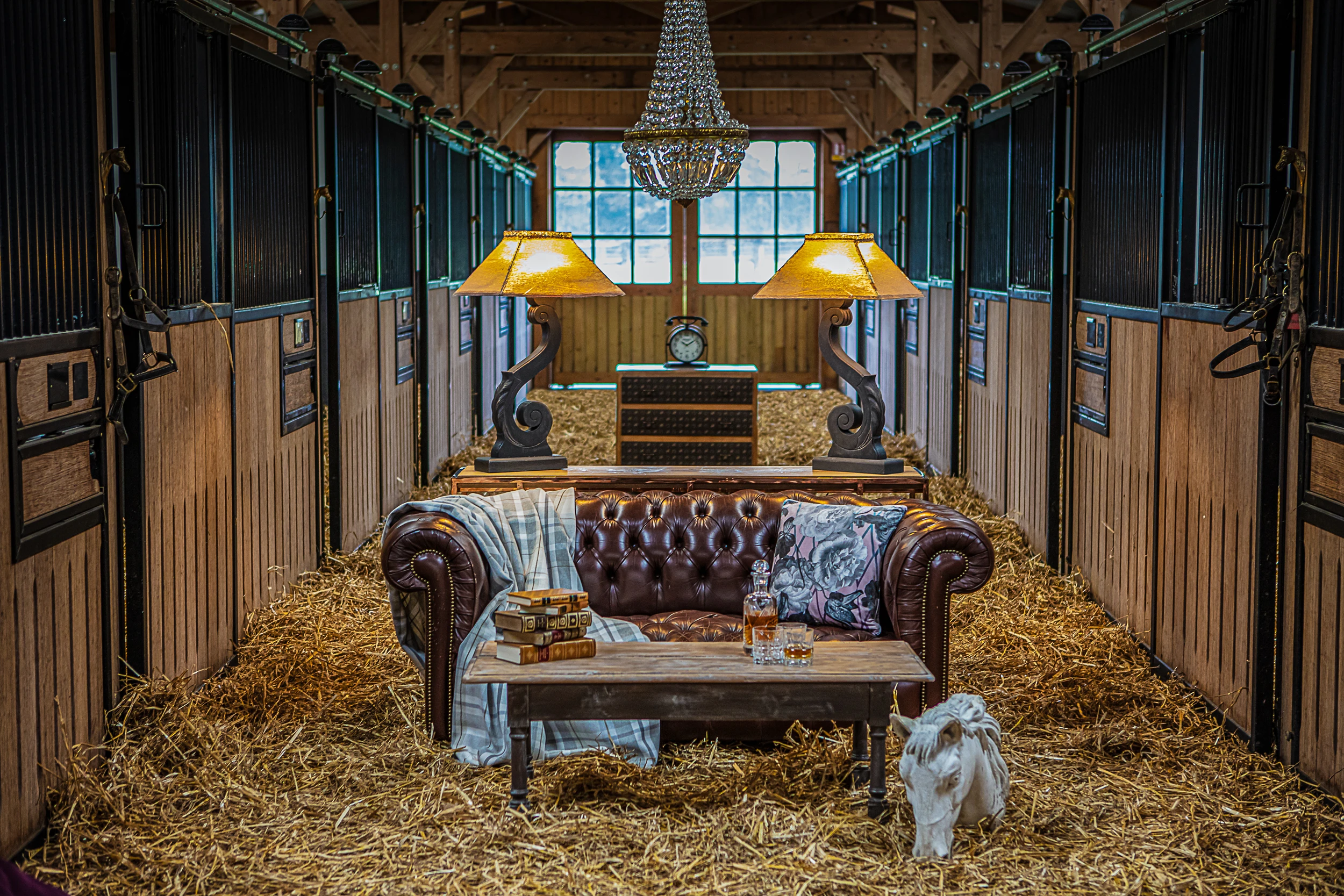
Start a project
Tell me what your site has to do, who it is for, and who on your side has to be able to update it. You get a written plan, a timeline and a fixed price before any work begins, and one person handling all of it from there.
You write the text. Nobody knows your work better, and I am not going to pretend otherwise. I go over it afterwards for search: headings, structure, the terms your readers actually type. Once I have the material, a showcase site takes between one week and a month, depending on its size. A database site takes longer, and I will tell you how much longer before you commit.
From $3,500: the build, a year of hosting, technical updates and the content changes that come with running a site. After the first year, one annual fee covers the same thing, and you know the figure before you commit. Heavier or more frequent work is quoted separately, and you will know before it starts.
Whether you want to create a site or improve the one you have, reach out to me.