

One afternoon, back when I lived on Long Island, I was on the phone with a friend in France. Halfway through the conversation he asked what I was doing that evening, the way you ask anything. A few of us were going into New York for dinner and a drink, friends of mine, all of them scientists. The answer left him puzzled. He laughed, and he wished me good luck.
He meant it kindly. He thought he was being funny. For him a scientist was someone who possibly lives a little outside the world, probably badly combed, certainly dull, and inevitably a nerd nobody can follow. The films add their own layer on top: the mad one who destroys the planet, on purpose or by accident, and the one who would rather run it. Not, in any case, the person you want at your table, least of all if the point of the evening is to enjoy yourself.
I think that phone call is the moment I started wanting to show what I saw of them.
I had no idea how. So I did the only thing I know how to do. I photographed them, and not their profession.

A campus in the woods
We had just moved to the United States. My wife was working at the laboratory, I did not speak a word of English, and I knew nobody here. It was a fresh start. You can ask yourself a lot of questions at a moment like that, and the answers are not always the ones you need in order to stay. I did not want to ask them. I filled that space with curiosity, and with the people I was meeting.
Those people were the ones she worked with, which is how nine out of ten of my friends ended up being scientists. Most of them are biologists working on genetics, each on a different question. Diabetes, cancer, immunology, plants.
The laboratory sits in the woods on the north shore of Long Island, on the far side of the water from the village it takes its name from. The campus has a beach, a restaurant, a bar, and barbecues in the summer. I was there almost every day. I ate there, I talked with the same faces week after week, and several of them assumed I worked in one of the labs.
I also went there for the ospreys. There were nests a few hundred meters out, and I would sit and wait, sometimes for a long time, for a bird to come back.
What you wait for is the eyes
That was my work then. Wildlife and landscapes, for magazines and for exhibitions. Sitting alone in a hide with no idea what the next hour would bring, and the animal deciding whether to appear. Said out loud, that is a fairly nerdy way to make a living. Probably nerdier than anything my friends were doing in their labs. The stereotype fits me better than it fits them.
What you wait for, with an animal, is the eyes. The rest is setting. You can have the light, the distance and the posture, and if the look is not there you have nothing, only a well made photograph of an animal.
So I went to portraits with the same thing in mind, in black and white, in the tradition of Yousuf Karsh. What I was waiting for did not change. The way of getting it did.
With an animal you wait, and you take what comes. With a person you can ask. You explain what you are after, where to look, that the eye should carry past the lens rather than land on it, and that the look has to convince.
The first fifty
I had no studio. Doing wildlife, I never needed one. So I made one in my living room, pushing the furniture aside every time somebody came, with a backdrop and two studio flashes from the fifties that had belonged to my grandfather, back when he was still alive and taking photographs. Small ones, which is what I wanted, so the light would not spread everywhere and the shadow would stay.
I asked each of them to bring a prop that represents what you do outside the lab.
The word travelled quietly at first, and coworkers started inviting themselves. Then it travelled faster, other people put their names forward, and it got away from me. I had made about fifty portraits by then. The laboratory lent me a room on campus to carry on, and professors came, and so did the director of the institute.
An evening for the donors
The laboratory then used the portraits for a fundraising evening.
Twenty prints stood on tripods along both sides of the alley where the guests arrived. Each one carried the story that came with it, and people stopped to read them on their way in.
The point was easy to make that way. Money given to a research institute does not go into a building. It goes to the people working inside it, and that evening those people were standing at eye level on the way to the door.
The official portraits
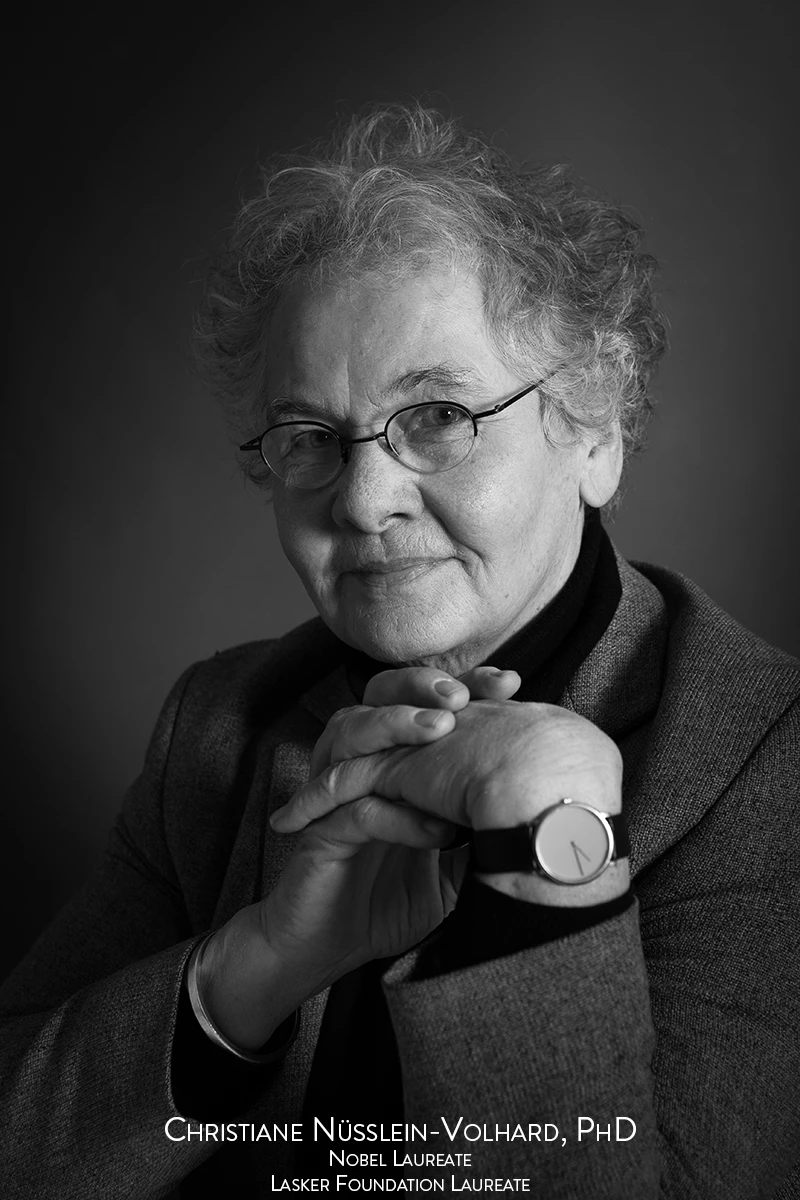
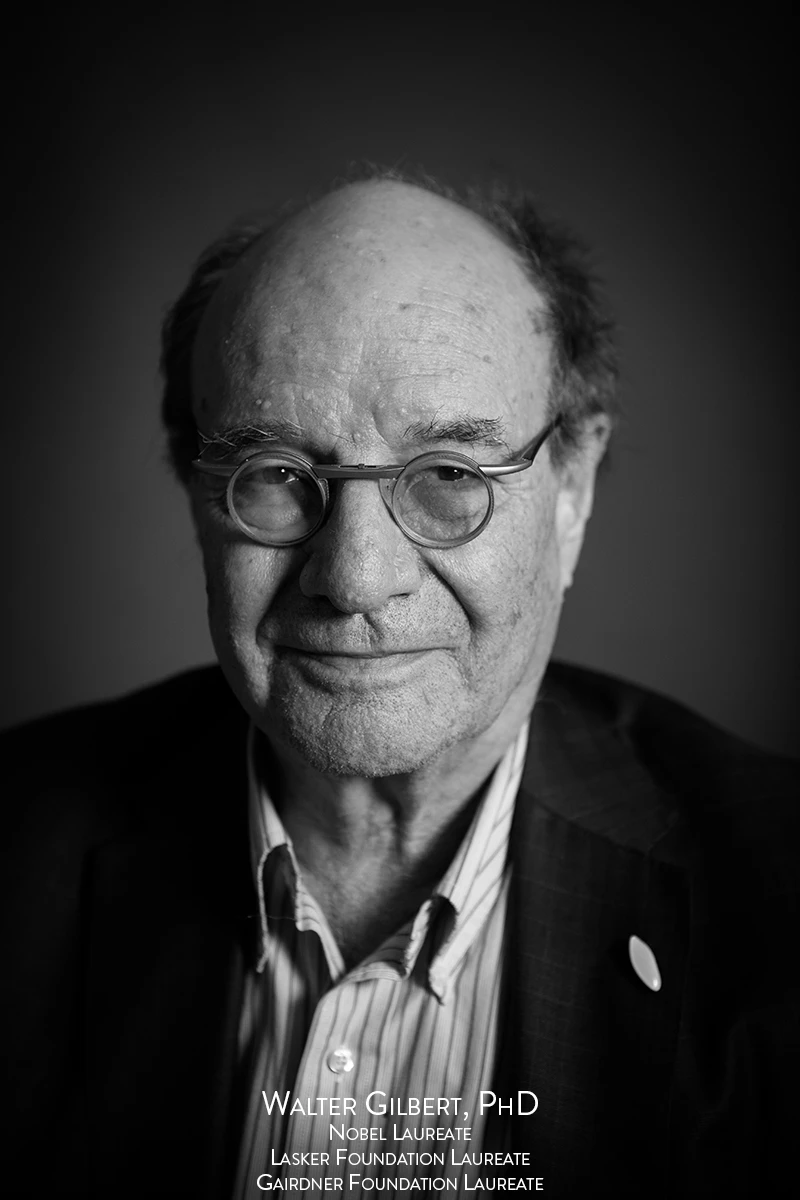
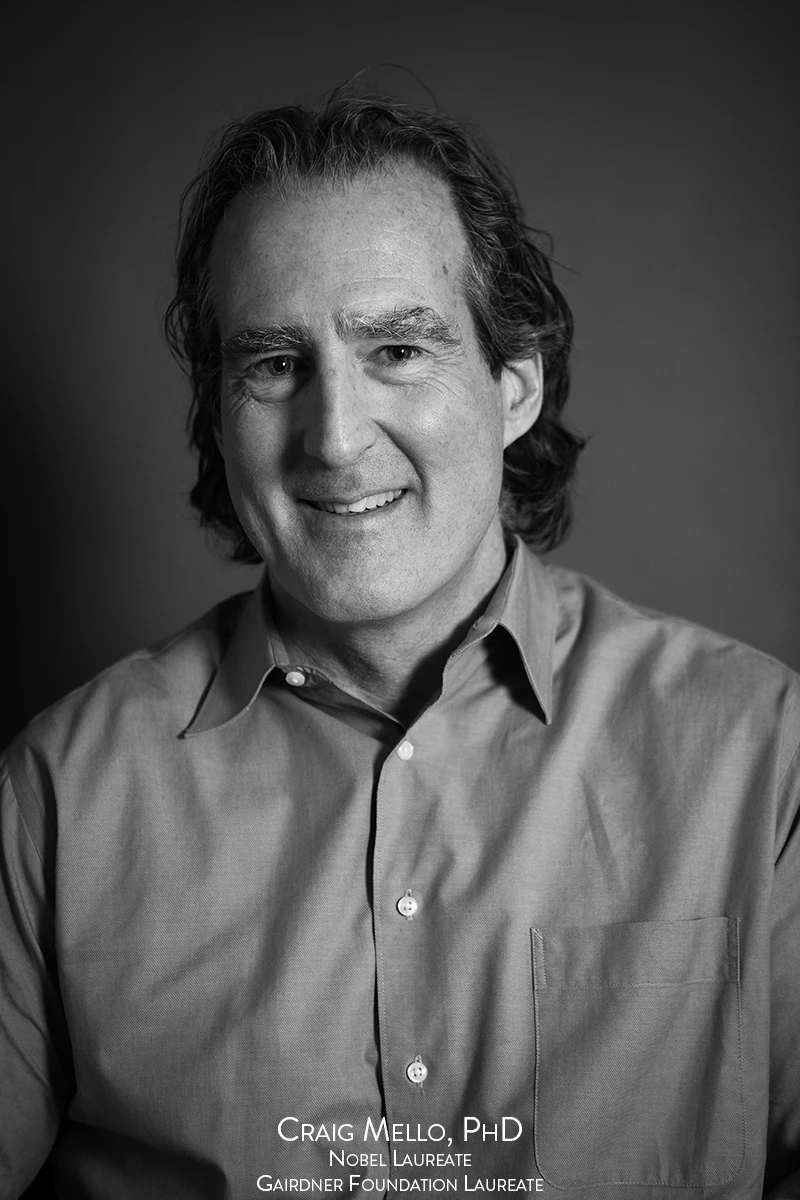
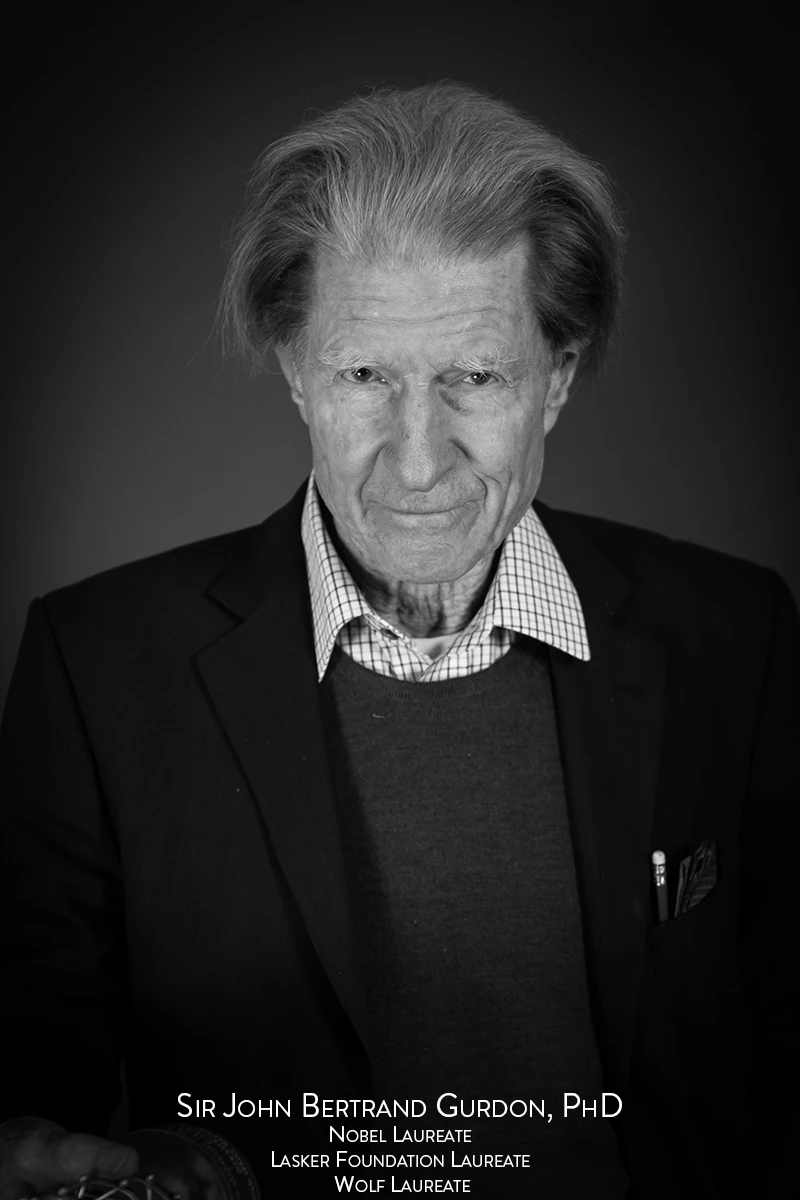
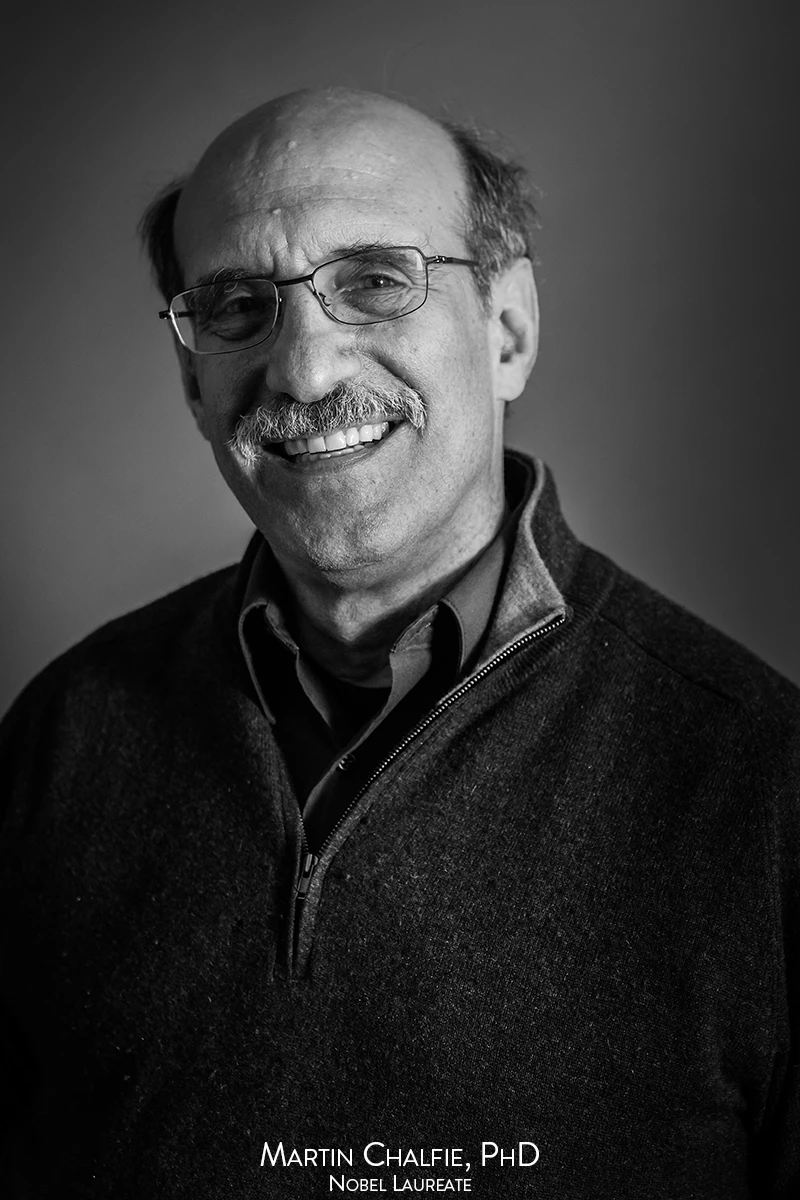
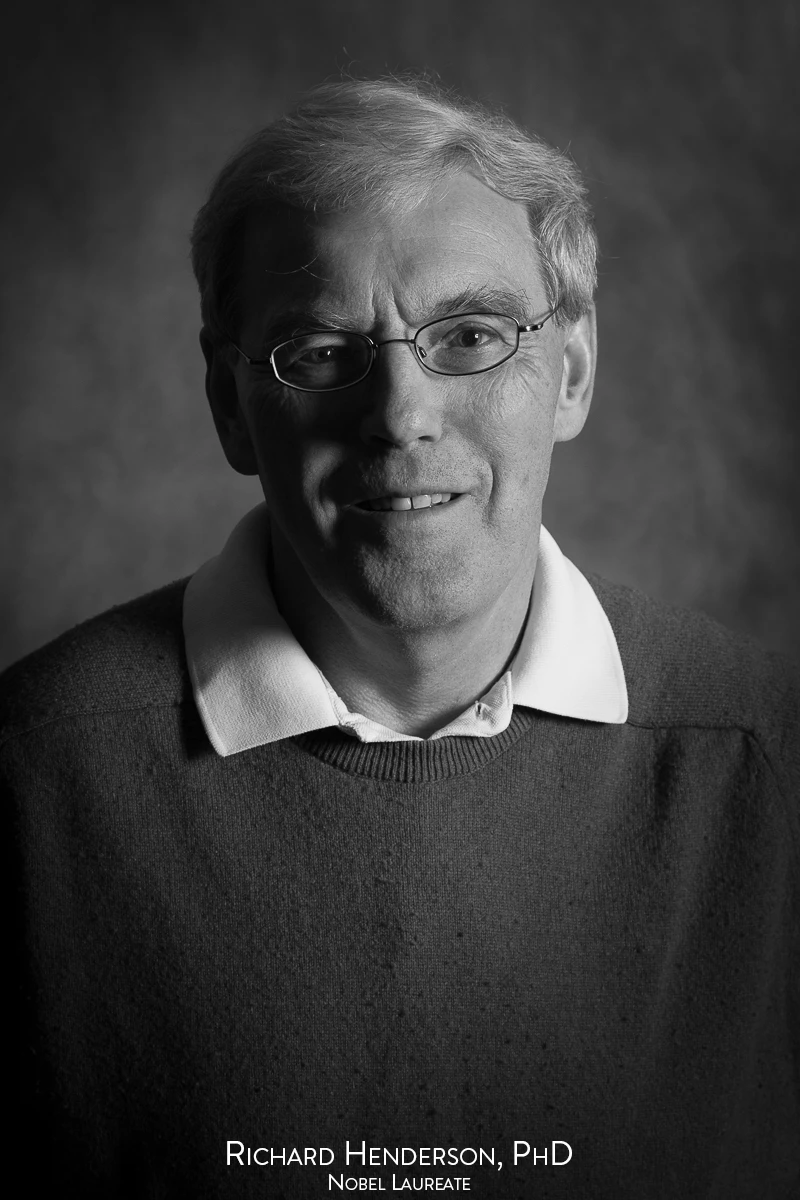
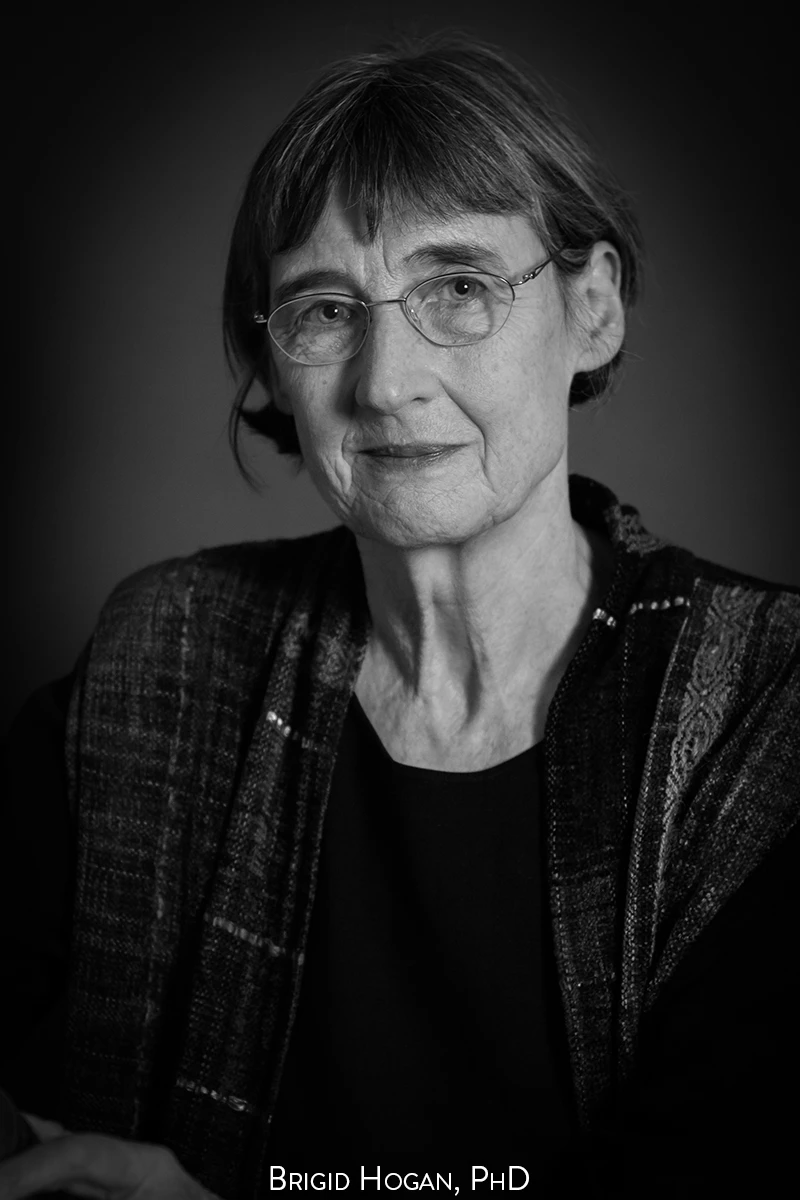
The laboratory then began asking me to photograph its most prestigious guests in the same black and white, to hang in the institute. Four full days at a time, several times over three or four years. That is how I came to sit one to one with laureates of the Nobel, the Lasker, the Breakthrough and others, who had made extraordinary discoveries and made them sound simple when they talked about them.
I found that feeling again years later, photographing dancers. Watching them, it looks easy. That is exactly what tells you it is not, and that it is being done well.
Twenty to thirty minutes each. Most people would call that short. For me it is the maximum.
A lot of people come to be photographed reluctantly. Knowing it will not last hours puts them at ease before anything else does. A real hello and a clear explanation of what we are about to do finishes the job, and the first frames are always the best ones. A session that drags produces bad portraits, because what comes after is a subject who is bored, and it shows.
So I let them talk, and while they talked I asked them for that same thing. Convince me of something, just by looking at me.
No object this time, and nothing in the frame to explain the person. What was left was the expression and the light on it.
Some of those prints hang in the institute today.










Portraits on commission
The method has not changed since. I photograph researchers and their teams on site, in laboratories and production halls, in the time they actually have.
The same approach, commissioned by a research institute in Connecticut: The Jackson Laboratory.